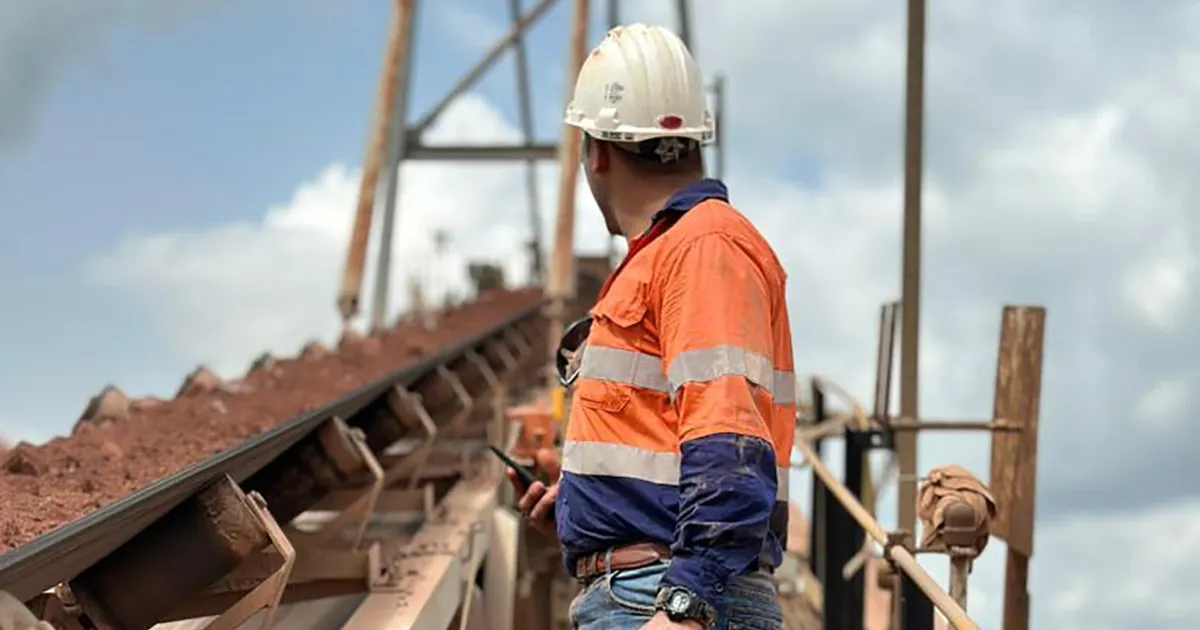
Lost production is a major direct cost that quarries and mines contend with when a conveyor system goes down. Some of the most common conveyor issues include belt misalignment, material carryback and rip events, among others.
Drawing on decades of field experience, Tru-Trac’s Douglas van der Westhuizen and Guy Fitt outline some of the best-practice maintenance approaches to keeping conveyors at peak performance.
Belt misalignment
One of the most common causes of unscheduled downtime on conveyor systems is belt misalignment which often results in spillage, belt edge damage, damage to the structure, increased power consumption and increased labour costs. According to Guy Fitt, National Sales Manager at Tru-Trac, misaligned belts will ultimately result in lost production, increased operating costs and safety hazards.
Douglas, Technical Sales Representative at Tru-Trac, adds that misaligned belts can also result in environmental issues by increasing material spillage and dust generation which can contaminate nearby ecosystems and water sources, lead to regulatory non-compliance and negatively affect the health of both workers and nearby communities.
Carryback
Apart from belt misalignment, carryback is another common enemy in conveyor systems. Carryback directly reduces conveyor productivity by creating unscheduled downtime for cleanup, degrading components such as rollers and pulleys, causing material loss and leading to belt tracking issues that necessitate further maintenance.
Carryback represents loss of product, which, over time, can add up to significant financial costs, especially in systems handling large volumes,” states Guy.
Continuous inspection
Commenting on some of the best-practice maintenance approaches to keeping conveyors at peak performance, Guy says that continuous inspection is one of the principal approaches to making sure that conveyor systems function optimally. With this approach, minor issues are identified early on before they escalate into major problems that lead to unexpected breakdowns. This minimises unplanned interruptions ensuring that material transport is uninterrupted and production schedules are maintained.
“Constant condition monitoring of conveyor components is one of the best practices in always ensuring correct belt tracking. It is essential to be fully aware of the basic characteristics of the different belt tracking components and for these to be employed correctly,” Douglas says, adding that all the structural conveyor components such as pulleys, idlers, take-ups and the supporting structure should always be properly aligned at all times.
“In fact, these should be the principal areas of concern whenever trying to identify belt tracking problems. All pulleys, snub rollers, troughing and return idlers must be square with the frame parallel to each other, and also be level,” he concludes.