Dust at Conveyor Transfer Zones
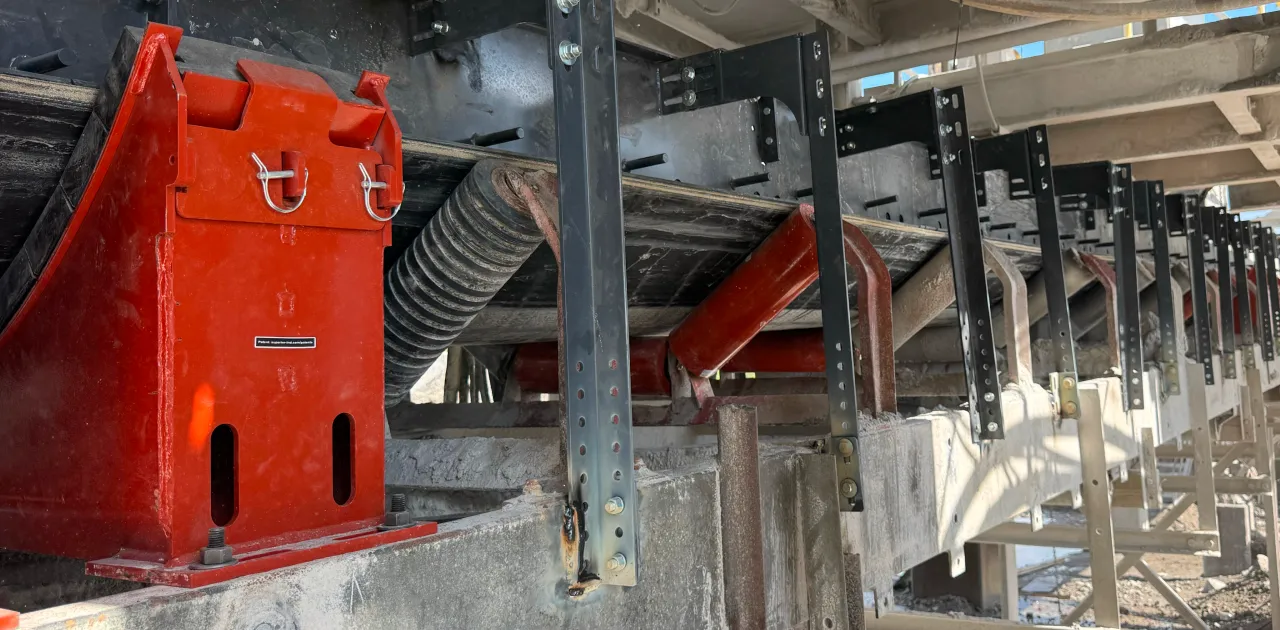
Superior Industries in the USA spotlights new dust control solutions for conveyor transfer points and load zones. The conveyor manufacturer’s new Adjustable Skirtboard Systems and RockGuard Skirting Liners are engineered for flexibility across multiple conveyor configurations, without the need for any custom fabrication.
“Many new conveyors arrive on site with standard OEM skirtboards that simply aren’t long or tall enough for real-world applications,” says Chris Mullen, a conveyor components territory manager for Superior in the Southeast United States. “Thus, often, an open, uncontrolled environment has to be turned into a sealed system that manages airflow and dust.”
Conveyor specific adjustability
Adjustable skirtboards deliver affordable transfer point and load-zone containment, cutting dust, spillage, cleanup, and worker risks. They are engineered with a modular, adjustable design that allows operators to fine-tune length and height for each conveyor application, while creating a more effective seal along the belt to reduce fugitive dust.
Eliminating the need for custom engineering and costly installation, skirtboard systems are easily adjustable in 3-inch increments. Mounting legs are designed for easy onsite trimming and fitting, which also simplifies installation.
Liners
Complementing the skirtboards, Superior’s RockGuard Skirting Liners are designed to contain material within the transfer zone while reducing dust, spillage, and preventing material buildup on the shelf of the liner.
“By combining adjustable skirtboards with liners, producers protect the skirtboard structure itself, extending the life of the entire skirting system while reducing rebuild cycles and long term maintenance costs,” says Chris.
For sites where dust levels remain elevated, the modular skirtboard system can be expanded with belt covers, tail enclosures, or a stilling box. The stilling box controls dust mechanically, requiring no water or electrical power, which reduces maintenance demands and avoids moisture-related belt wear. These components can be added at any stage of the conveyor’s lifecycle, giving operators flexibility as site conditions evolve.