Temporary Rigging Structure
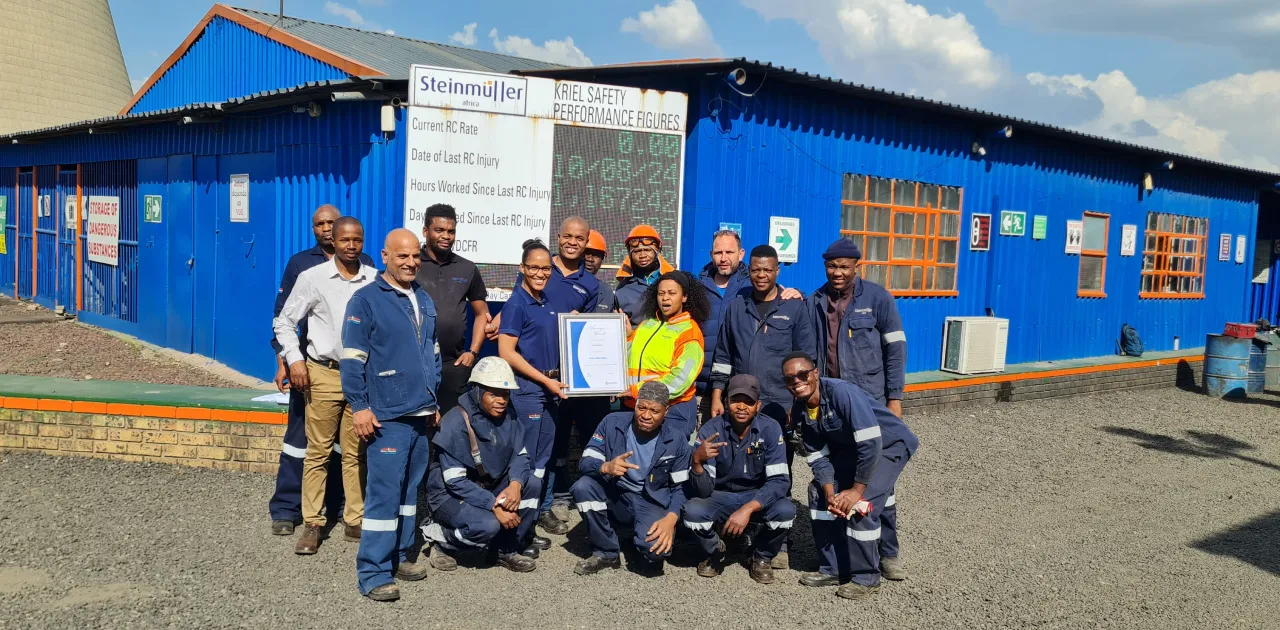
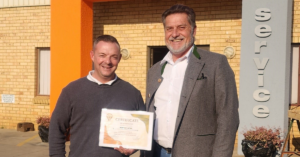
Steinmüller Africa’s crane-free rigging solution shortened the Kriel Unit 6 outage by 60 days, earning the company’s site team the 2025 Eskom Kriel Managers Award for Innovation.
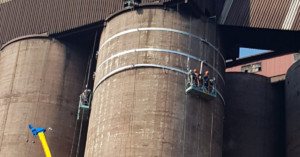
Following a fire incident at Unit 6 in 2024, both the turbine hall roof and overhead crane cables required repair. The roof work demanded a full-height scaffold assembly from floor level to 31 metres, which physically obstructed crane access.
All three work fronts
The solution eliminated a critical bottleneck during the unit’s post-incident recovery. When 31-metre scaffolding for roof repairs blocked access to the damaged overhead crane, itself essential for turbine work, the team designed and installed a temporary rigging structure that allowed all three work fronts to proceed in parallel.
The conventional sequence of roof repair, scaffold removal, crane restoration and turbine work would have added an estimated two months to the outage.
60-day saving
“The scaffolding prevented overhead-crane repairs necessary to support Eskom Rotek Industries’ turbine maintenance on the unit,” says Lonas Makhubele, Kriel Project Manager at Steinmüller Africa.
“Our team, together with the client, devised a rigging plan without the use of the crane. We built a rigging structure that our team used to assist Rotek, saving over 60 days on the turnaround. The unit was returned to service notably earlier because of this innovation.”
The purpose-built temporary rigging system decoupled the turbine work from crane availability, enabling concurrent execution across all critical paths and compressing the overall project schedule by more than two months.
Working together
The Eskom Kriel Managers Awards recognise measurable contributions to station performance across safety, reliability, innovation and operational excellence. The 2025 Innovation Award criteria prioritised solutions that demonstrably improved unit availability or reduced outage duration.
“This solution succeeded because of close collaboration, rigorous planning and disciplined execution,” Lonas concludes. “It’s a model for how contractors and clients can work together to compress critical paths and improve project outcomes.”