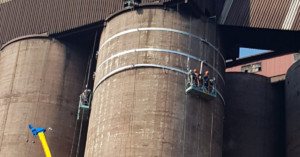
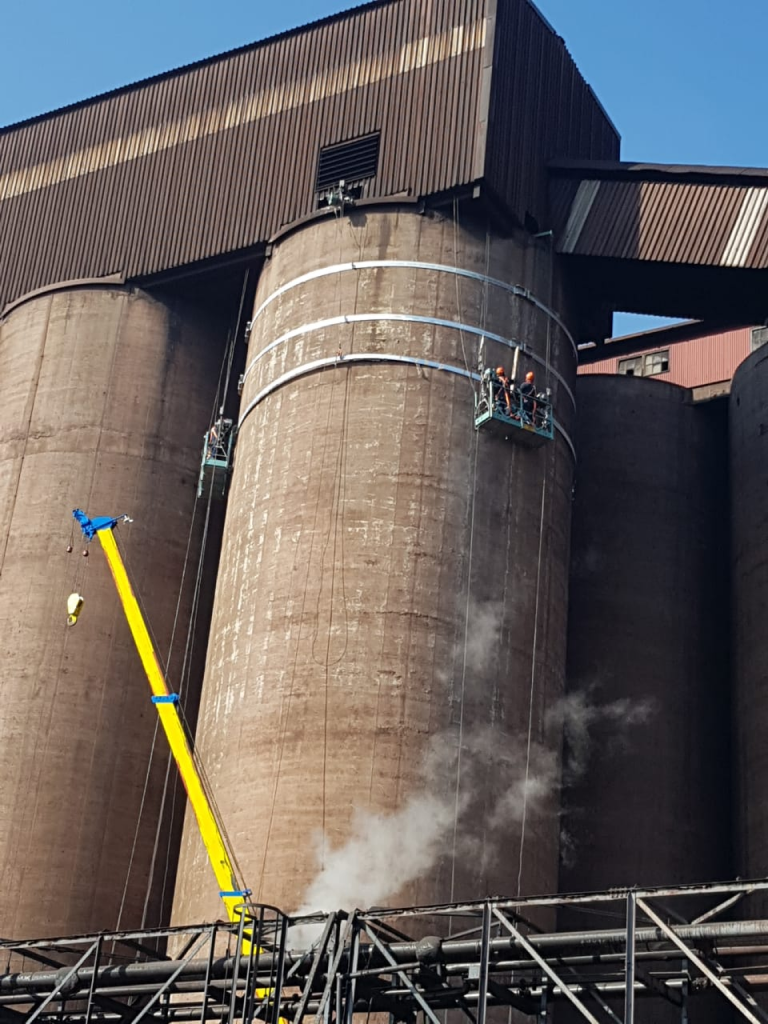
 For Bongela Mining & Industrial Service, silo cleaning is not simply about removing accumulated material and restoring lost capacity, it also creates an important opportunity to inspect the condition of the structure and identify issues that may otherwise remain hidden.
Material build-up inside a silo can progressively reduce effective capacity, restrict material flow and contribute to operational bottlenecks. As accumulated material is removed, however, another benefit becomes apparent: areas of the asset that were previously concealed become accessible for inspection.
Creating visibility
“This is where a SIMM (Structural Inspection & Maintenance Management) inspection becomes an integral part of the post-cleaning process,” comments CEO, Raymond Graham. With the interior of the silo cleared, inspection teams can assess areas that may have been obscured by accumulated material and identify potential concerns such as wear, corrosion or structural defects.
Early identification gives operators the opportunity to address these issues before they develop into more significant maintenance problems. “Rather than treating cleaning and inspection as two unrelated maintenance activities, integrating the two provides a more complete picture of asset condition,” says Raymond.
More informed maintenance
This supports a more proactive maintenance approach. Instead of waiting for a structural or equipment-related problem to affect production, operators can identify potential areas of concern and plan appropriate interventions around existing maintenance schedules. “For operations where downtime can have a significant impact on production, that visibility can be particularly valuable,” highlights Graham.
Advances in specialised cleaning techniques, rope access solutions and remotely operated technologies are also changing how maintenance activities can be undertaken, enabling organisations to address difficult-to-access areas with greater efficiency and reduced disruption to operations. The result is a maintenance philosophy centred on understanding the condition of an asset rather than simply responding when something fails.